
Travel
Why Travel Bookings Generate So Many Chargebacks
The longer the gap between booking and travel, the higher your dispute rate. Here's what drives chargebacks and what actually reduces the damage.
How much do travel companies lose to currency conversion? The answer depends on how many times the money changes hands.
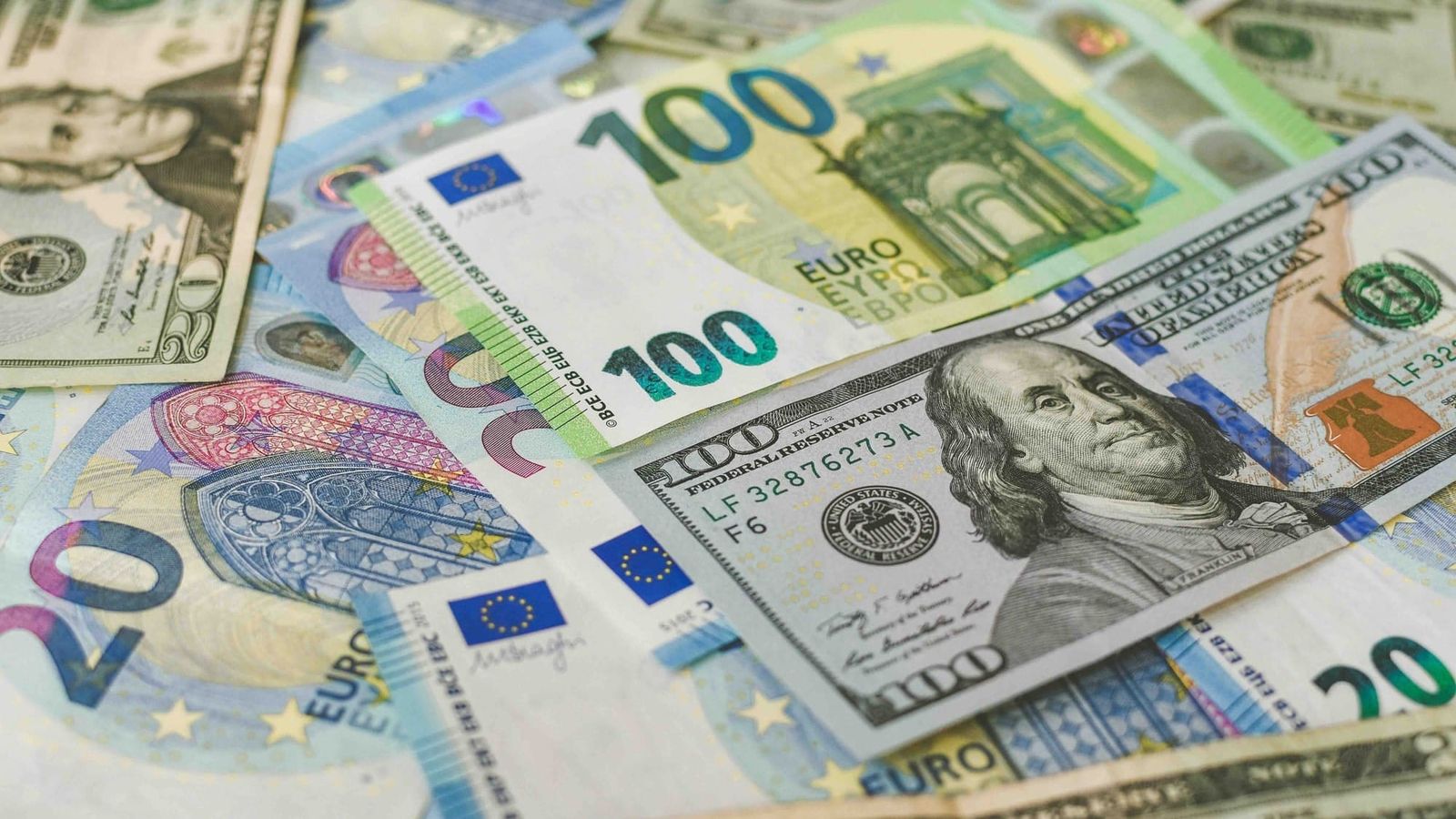
Currency conversion is charged each time money changes denomination, not once per booking. A traveler paying in one currency for an itinerary with suppliers in three others produces four or more conversion events, each carrying a spread that commonly runs one to three percent above the mid-market rate. Your commission is earned once on the booking value; the FX cost applies repeatedly against the same transaction, which is why multi-currency itineraries net worse than their headline commission suggests.
A customer in Chicago books a package: hotel in Portugal, a tour operator that settles in pounds, a transfer company paid in euros locally. They pay $2,480 in US dollars.
Now count the currency events.
Dollars in. Euros out to the hotel. Pounds out to the tour operator. Euros out to the transfer company, possibly through a different rail with its own pricing. Depending on how your treasury is structured, there may be an intermediate conversion in the middle that nobody on the commercial team knows about.
That's three or four conversions on one booking. If each carries a spread of two percent, you've paid roughly six to eight percent of transacted value in currency cost against a commission of twenty.
Most travel businesses model FX as a single line applied once per booking. That model understates the real number by a factor equal to the number of currencies in the itinerary.
The honest answer is that most can't tell you, because the cost is embedded rather than invoiced.
On the inbound side, published guides to OTA economics note that a fee of one to three percent may apply whenever a guest pays in a currency other than the local one.
The outbound side is where it gets quieter. Banks routinely apply markups of two to three percent above the mid-market rate on cross-border payments, usually buried inside the exchange rate rather than itemized as a fee.
That distinction matters more than the percentage. An itemized fee appears on a statement and gets negotiated. A spread appears as a slightly worse rate, and detecting it requires comparing what you received against the mid-market rate at the moment of conversion, which almost nobody does retrospectively.
The practical consequence: FX is the largest payment cost most travel platforms have never explicitly approved.
Your commission scales with booking value. Conversion cost scales with the number of times money changes denomination.
Two bookings at $2,480 earn the same commission. A single-hotel domestic booking converts once or not at all. A four-supplier, three-currency itinerary converts four times. Same revenue, materially different net.
This produces an uncomfortable result. The complex multi-day packages that differentiate you from a metasearch listing, the ones your product team is proudest of, are frequently your worst margin per dollar of commission. Not because they're priced badly, but because they touch more currencies and more counterparties than a simple booking does.
None of that is an argument against selling them. It's an argument for knowing the number before you price them.
Transparent FX priced per conversion, not embedded in a spread you have to reverse-engineer.
Talk to our team →If you price in the traveler's currency, you take the conversion. If you don't, they take it at their bank and you take the conversion loss instead, since research consistently shows pricing in an unfamiliar currency costs conversion.
Funds collected in one currency and held centrally before distribution may convert into a base currency and then back out again. Two conversions where the itinerary needed one.
Every payout into a currency other than the one you're holding converts. A payout vendor's spread here is frequently wider than an acquirer's, because it's compared against less.
Not strictly FX, but it stacks in the same place. Card acceptance costs your supplier pays get priced back into your net rate, and on cross-border card transactions those costs are higher.
Most of the leakage above happens because conversion occurs inside vendors whose pricing you infer rather than observe, at moments you don't control.
Coinflow runs card acceptance, foreign exchange, settlement, and supplier payout through one integration, which collapses the number of conversion events to the ones the itinerary actually requires.
There's no central treasury hop between an acquirer and a separate payout vendor, because they're the same system. Conversion is priced transparently rather than embedded in the rate, so the cost on each leg is a number you can see at the time rather than a shortfall you reconstruct at month end.
Timing matters here too, in a way that's easy to miss. Conversion risk is partly a function of time, since funds sitting in transit through a settlement cycle are exposed to movement you didn't choose. Converting at the point you release, rather than days after, removes that exposure without a hedging program.
If you've never counted the conversions on a multi-supplier itinerary, talk to our team and we'll do it with you.
One integration for pay-ins, conversion, and supplier payout, priced where you can see it.
Talk to our team →Pricing in the traveler's currency generally improves conversion, because it removes the uncertainty of an unknown charge at their bank. The trade-off is that you take the FX exposure rather than passing it to them. That's usually worth it, provided you can see the rate you're getting. If the conversion is happening inside a spread you can't observe, you've taken on a cost you can't manage.
Compare the rate you received against the mid-market rate at the time of conversion, which is published and free to check. The difference is your spread, whether or not anyone called it a fee. Do this on a sample of real payouts across a few corridors rather than asking your provider, since the answer you get from a rate card and the answer in your settlement data are sometimes different.
For most, no. Hedging programs suit businesses with predictable, large, recurring exposures in a small number of currencies. Travel platforms typically have many small exposures across many currencies with booking-dependent timing, which makes hedging expensive relative to the risk. Reducing the number of conversions and shortening the time funds spend in transit usually delivers more than a hedging program would.
This content is for informational purposes only and does not constitute financial, legal, or investment advice.

Steven Cook is Coinflow's Head of Strategy, where he leads the company's approach to growth, positioning and long-term strategy in stablecoin payments infrastructure.
Travel
The longer the gap between booking and travel, the higher your dispute rate. Here's what drives chargebacks and what actually reduces the damage.

Travel
How can multiple travelers split payment for one booking? Let's look at the collection models and where each one breaks down.
Travel
Which payment provider fits a travel business? Here's a comparison built around advance booking, supplier settlement, and cross-border decline rates.